

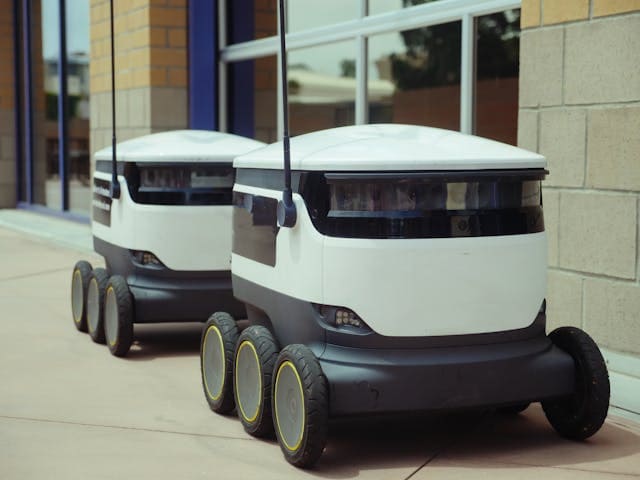
Executives finally face a simple truth: mobile robots don’t transform operations if their batteries can’t keep up. Energy strategy now decides which automation projects scale and which stall in pilot limbo. The discussion no longer sits with engineers tinkering in a lab. It hits the CFO’s spreadsheet, the COO’s uptime targets, and the sustainability team’s carbon reports. Energy use, charging time, and power density now dictate layout, staffing, and even contract terms. Ignore this shift, and automation plans quietly fall behind bolder competitors that design around power from day one.
-
From Battery Anxiety to Runtime Guarantees
The most obvious mobile robots trends for 2026 sits right in the battery tray. Companies stop tolerating vague runtime claims. They demand shift-level guarantees: eight hours, twelve hours, or a clear hybrid plan with scheduled charging. Vendors respond with higher-energy-density cells, smarter thermal control, and pack designs that swap in minutes, not hours. The game changes from “How long can it run?” to “How predictable is the runtime?” Reliability in energy now ranks beside safety as the top buying filter, especially in high‑volume logistics and manufacturing sites worldwide.
-
Smart Charging Becomes a Scheduling Problem
Energy planning used to involve strategically placing a few chargers and hoping for the best results. That era ends. Charging now folds into fleet scheduling like a constraint in a routing algorithm. Robots queue based on job priority, state of charge, and dock congestion. The fleet manager cares less about absolute battery size and more about coordinated micro‑breaks that hide charging inside idle time. In effect, power becomes a software problem. The strongest advantage goes to vendors that integrate charging logic directly into mission planning and workforce coordination tools.
-
Energy Metrics Hit the CFO’s Dashboard
Energy was once hidden inside a “facility overhead.” Not anymore. Every serious deployment tracks cost per robot‑hour, kilowatt‑hours per mission, and energy per unit handled. The comparison shifts from robots versus people to robots versus every other capital expense in the building. Leaders start asking which workflows justify high‑drain motion and which warrant static automation or simple conveyors. That kind of scrutiny pushes vendors to publish honest energy profiles, not marketing fantasy. Clear, credible numbers decide budget approval, and the robots that can’t prove savings stay in the brochure or the demo lab.
-
Sustainability Targets Start Steering Robot Choices
Carbon targets stop being a slide in the ESG report and start influencing spec sheets. Companies favor robots that support cleaner grids, charge off-peak, and reduce emissions per task. Warehouses experiment with pairing fleets to on‑site solar or storage, turning robots into flexible loads that stabilize demand spikes. Energy efficiency suddenly carries marketing value, but it also protects against rising power prices and regulation. The machines that balance performance with a smaller footprint win long contracts, because they help leadership hit climate goals without stalling automation or sacrificing service levels.
Conclusion
Energy strategy quietly becomes the backbone of mobile robot deployments. The pattern’s clear: predictable runtime, intelligent charging, financial transparency, and measurable sustainability push robots from novelty to core infrastructure. Businesses that treat energy as an afterthought end up with fleets that run well in demos but struggle in peak season. The rest is designed around power from day one: layout, software, contracts, and KPIs. Those companies don’t just run more robots. They run steadier operations, with costs, uptime, and emissions that actually match the slide deck and the board’s expectations.